Why Fibromyalgia Medical Marijuana Could Transform Your Pain Management
Fibromyalgia medical marijuana is emerging as a promising treatment option for the millions of Americans struggling with this complex chronic pain condition. Research shows that cannabis may help reduce widespread pain, improve sleep quality, and address the anxiety and depression that often accompany fibromyalgia.
Quick Overview: Fibromyalgia Medical Marijuana Benefits
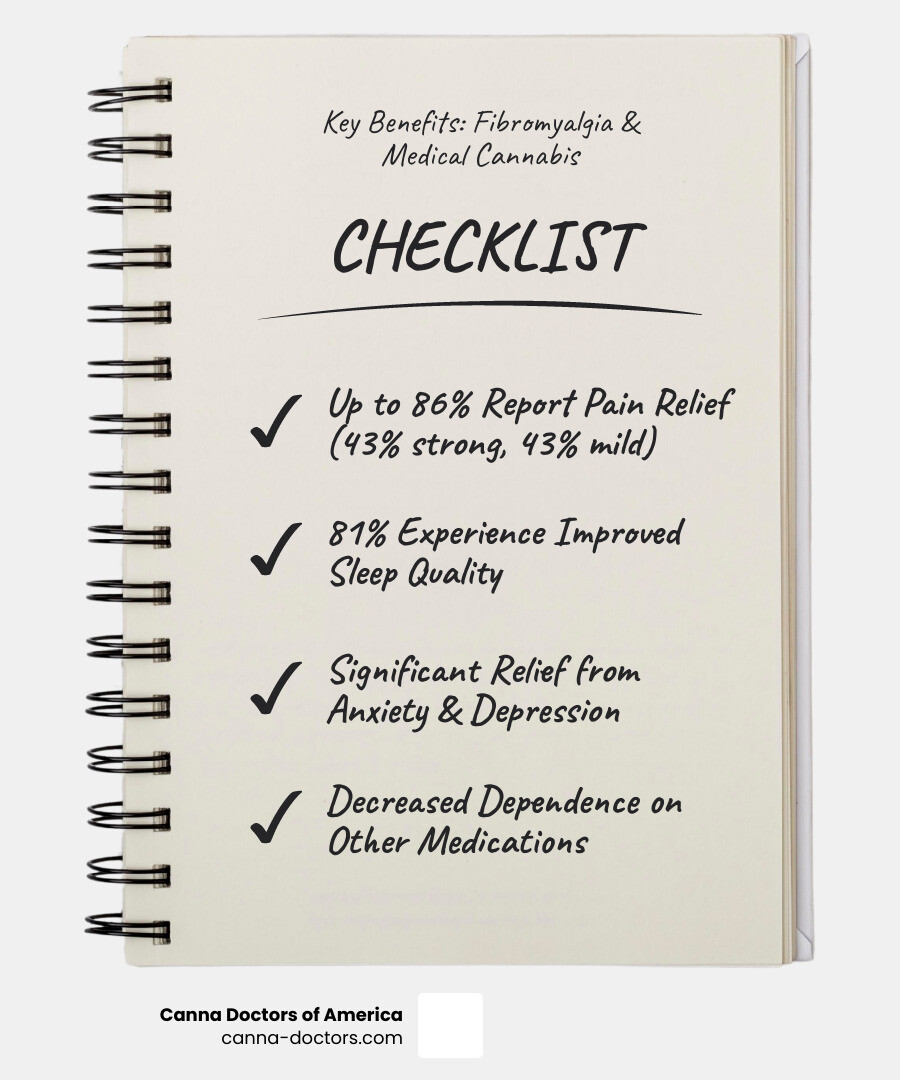
- Pain Relief: Studies show 43% of patients report strong pain relief, 43% report mild relief
- Sleep Improvement: 81% of fibromyalgia patients experienced better sleep with cannabis
- Mood Support: Significant improvements in anxiety and depression symptoms
- Reduced Medication Dependence: Many patients decrease or stop other fibromyalgia medications
- Multiple Symptom Relief: Addresses fatigue, muscle stiffness, and cognitive issues
Fibromyalgia affects up to 5% of the world’s population, with women being disproportionately impacted. This neurological condition causes widespread musculoskeletal pain, chronic fatigue, sleep disturbances, and cognitive difficulties often called “fibro fog.”
Traditional treatments like antidepressants and pain medications often fall short. Many patients find themselves frustrated with limited relief and unwanted side effects from conventional therapies.
Medical cannabis offers a different approach. The plant’s active compounds – THC and CBD – work with your body’s natural endocannabinoid system to help regulate pain, sleep, and mood. Recent research from the University of Arizona even identified specific cannabis terpenes that provide pain relief without psychoactive effects.
I’m Geoff Massey, Regional Director of Canna Doctors of America, where I help patients steer fibromyalgia medical marijuana treatment options through our network of trained medical doctors. My experience has shown me how transformative proper cannabis therapy can be for fibromyalgia patients seeking relief from chronic pain and related symptoms.
Basic fibromyalgia medical marijuana vocab:
Understanding Fibromyalgia and Its Complex Symptoms
Living with fibromyalgia feels like your body’s pain signals are stuck on high volume. This neurological condition affects how your central nervous system processes pain, creating a constant state of heightened sensitivity that can turn even gentle touches into sources of discomfort.
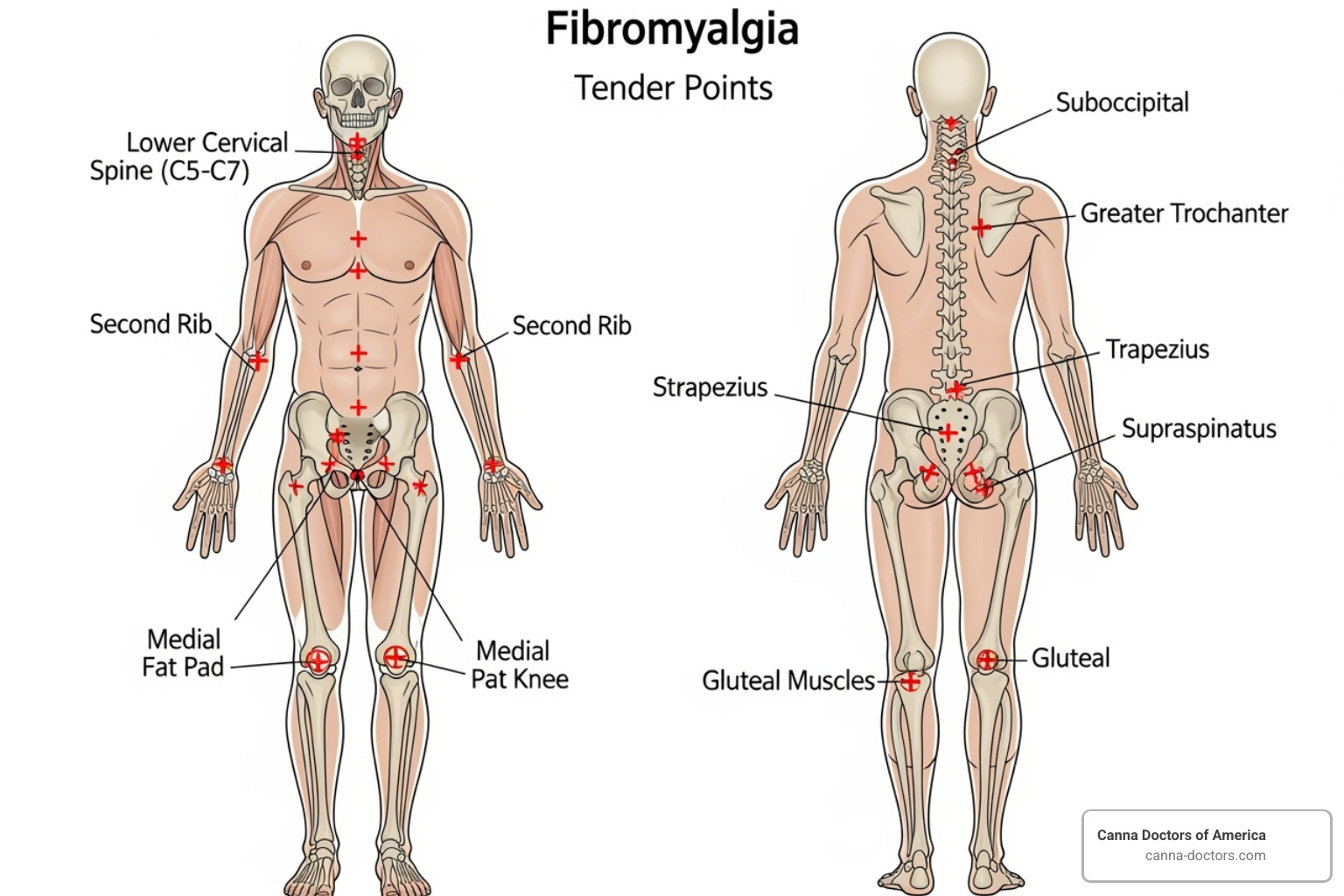
At its core, fibromyalgia involves central nervous system sensitization, where the brain and spinal cord amplify pain signals. This means normal sensations can be interpreted as painful.
The defining characteristic is widespread pain: a deep, persistent ache affecting multiple body areas for months on end.
Beyond pain, chronic fatigue is a profound, bone-deep exhaustion that isn’t relieved by sleep, making simple tasks feel overwhelming.
Then there’s the infamous “fibro fog”—cognitive cloudiness that affects concentration and memory, which can be frustrating and impact mental sharpness.
Sleep disturbances are common, creating a vicious cycle of restless, unrefreshing sleep that worsens pain and fatigue.
Headaches, from tension-type to migraines, are also common, often triggered by stress or the strain of chronic pain. Many patients also experience irritable bowel syndrome (IBS), adding digestive discomfort to their symptoms.
About 4 million Americans live with fibromyalgia, and roughly 90% are women. The condition typically develops between ages 30-50. Doctors believe it may be triggered by physical trauma, emotional stress, infections, or genetic factors.
Diagnosing fibromyalgia is challenging as there’s no specific test. Doctors rely on symptom patterns, physical exams, and ruling out other conditions.
Common conditions that often occur alongside fibromyalgia include:
- Chronic headaches and migraines
- Irritable bowel syndrome (IBS)
- Anxiety and depression
- Restless legs syndrome
- Temporomandibular joint disorder (TMJ)
Traditional treatments like antidepressants, anti-seizure medications, and pain relievers often provide limited relief and come with unwanted side effects like drowsiness, weight gain, and nausea.
This treatment gap is why many patients are turning to fibromyalgia medical marijuana. Cannabis offers a different approach, working with your body’s natural systems rather than simply masking symptoms.
How Medical Cannabis Interacts with the Body’s Pain System
Ever wonder why fibromyalgia medical marijuana seems to help so many different symptoms at once? The answer lies in a remarkable system you probably never learned about in school – your body’s own endocannabinoid system, or ECS for short.
Think of the ECS as your body’s internal maintenance crew. It’s constantly working behind the scenes to keep everything balanced and running smoothly. This system plays a huge role in pain modulation, helping decide whether that signal from your knee actually needs your brain’s attention or can be ignored. It also helps regulate your mood – ever notice how pain and depression seem to go hand in hand? That’s partly your ECS at work.
Your ECS doesn’t stop there. It’s also deeply involved in your sleep cycles, which explains why people with chronic pain often struggle with sleep, and why better sleep can mean less pain the next day.
The Endocannabinoid System (ECS)
Your ECS has three main players working together. First are endocannabinoids – these are cannabis-like molecules your body makes naturally. The star players are anandamide (scientists actually call it the “bliss molecule”) and something with a much longer name: 2-arachidonoylglycerol, or just 2-AG if you want to save your tongue.
These natural compounds need somewhere to dock, which brings us to cannabinoid receptors. Think of these as specialized parking spots scattered throughout your body. CB1 receptors hang out mostly in your brain and nervous system, where they influence pain signals, mood, and memory. CB2 receptors prefer your immune system and other tissues, focusing more on inflammation and pain responses.
Finally, you have enzymes that act like cleanup crew, breaking down the endocannabinoids once they’ve done their job. This keeps everything balanced – too much or too little activity in the ECS can spell trouble.
How Cannabis Restores Balance
Here’s where medical cannabis enters the picture. The plant contains compounds called cannabinoids that can step in when your natural ECS needs backup. The two most important ones for fibromyalgia are THC and CBD.
THC (Tetrahydrocannabinol) is the one that gets all the attention because it can make you feel “high.” But for fibromyalgia patients, THC’s real value lies in how it directly connects with both CB1 and CB2 receptors. When it does this, it can dial down pain signals traveling through your nervous system and help quiet that overactive pain response that makes fibromyalgia so challenging.
CBD (Cannabidiol) works more like a behind-the-scenes coordinator. It doesn’t make you high, and it doesn’t attach to receptors the same direct way THC does. Instead, CBD influences the system more subtly, helping reduce inflammation, ease anxiety, and even balance out some of THC’s stronger effects.
When you have fibromyalgia, many researchers believe your ECS might be out of whack – not producing enough endocannabinoids or not responding to them properly. Fibromyalgia medical marijuana can help fill that gap, providing the cannabinoids your system needs to restore balance.
This is why cannabis can address so many fibromyalgia symptoms at once. Instead of taking one medication for pain, another for sleep, and a third for anxiety, you’re working with your body’s master regulatory system to help everything function better together.
The science behind this is fascinating, and researchers continue uncovering new details about how the ECS works. If you’re curious to dive deeper into the research, you can explore Scientific research on the endocannabinoid system’s role in health to see what scientists are finding about this remarkable system.
The Evidence: Fibromyalgia Medical Marijuana Research
The question on everyone’s mind is, “Does it actually work?” While research into fibromyalgia medical marijuana is still evolving, existing evidence from patient-reported outcomes and preliminary studies is highly encouraging. The data points to medical cannabis as a promising option for managing fibromyalgia’s complex symptoms.

It’s important to acknowledge the limitations of current research. Many studies are small, with short follow-up periods. While anecdotal and observational evidence is strong, more robust, high-quality clinical trials are needed to establish definitive conclusions and standardized treatment protocols.
Targeting Chronic Pain with Medical Cannabis
Chronic widespread pain is fibromyalgia’s most debilitating symptom. Substantial evidence suggests cannabis is effective in treating chronic pain in adults, and studies on fibromyalgia are encouraging.
A significant 2011 study on cannabis users with fibromyalgia found that 43% of participants experienced strong pain relief and another 43% reported mild relief. Other studies have shown that cannabis use can lead to meaningful reductions in both pain and stiffness. Some research found that THC reduced chronic pain by at least 50% in patients.
Observational data also shows that adding medical cannabis to standard pain treatment significantly improved patient-reported outcomes for chronic pain conditions like fibromyalgia, often reducing pain intensity and improving daily function.
Alleviating Other Debilitating Fibromyalgia Symptoms
Fibromyalgia medical marijuana shines in its ability to address more than just pain. It shows promise for many of the condition’s other challenging aspects.
Sleep quality improvement is a dramatic benefit. In the 2011 study, a remarkable 81% of participants reported that cannabis provided strong relief from sleep issues. The National Academies Press review also concluded there’s moderate evidence that cannabis products can help improve sleep in people with chronic pain. For more insights, you can explore the Evidence on cannabinoids for sleep.
Anxiety and depression relief is another significant benefit, as many cannabis users with fibromyalgia report notable improvements in their mental health.
Headache, migraine, muscle spasm, and stiffness relief are also commonly reported. Cannabis’s muscle relaxant properties can alleviate these symptoms, making daily activities more comfortable. Patient surveys consistently show that cannabis can offer broad-spectrum relief for fibromyalgia symptoms.
THC vs. CBD for Fibromyalgia Medical Marijuana
Understanding the roles of THC and CBD is crucial when considering fibromyalgia medical marijuana. These primary cannabinoids offer different therapeutic effects.
THC for pain relief is particularly powerful. It’s a potent pain reliever and anti-inflammatory agent that directly interacts with cannabinoid receptors in the brain and nervous system, changing how we perceive pain. Studies indicate that cannabis treatments with higher THC levels can increase pain thresholds in fibromyalgia patients.
CBD for inflammation and anxiety is non-psychoactive and valued for its anti-inflammatory, pain-relieving, and anti-anxiety properties. CBD can also temper some of THC’s psychoactive effects, making it a valuable component in a balanced product.
For fibromyalgia, a combination of THC and CBD is often more effective than either alone due to the entourage effect—a theory that cannabis compounds work together synergistically. A 2018 study found that high-THC cannabis increased pain threshold, while CBD alone did not, highlighting the importance of a whole-plant approach.
Terpenes and their role add another layer of therapeutic potential. These aromatic compounds offer their own benefits, including pain relief, without psychoactive effects. Recent University of Arizona research on terpenes for chronic pain identified specific terpenes with pain-relieving properties, opening up exciting possibilities for fibromyalgia treatment.
| Feature | THC (Tetrahydrocannabinol) | CBD (Cannabidiol) |
|---|---|---|
| Psychoactive? | Yes | No |
| Main Effects | Strong pain relief, muscle relaxation, appetite stimulation, mood alteration, euphoria | Anti-inflammatory, anti-anxiety, pain relief (less direct than THC), anti-nausea, sleep aid, mitigates THC’s psychoactivity |
| Fibromyalgia Focus | Widespread pain, muscle stiffness, sleep onset, mood elevation | Inflammation, anxiety, overall well-being, complementing THC’s effects |
| Receptor Binding | Primarily CB1 and CB2 receptors | Indirectly affects CB1/CB2, interacts with other receptors |
| Best Used For | Severe pain, insomnia, appetite issues, when psychoactive effects are acceptable | Daytime use, anxiety, inflammation, enhancing full-spectrum benefits, reducing THC side effects |
A Practical Guide: Risks, Side Effects, and Legality
When considering fibromyalgia medical marijuana, understand the safety and legal aspects. At Canna Doctors of America, we empower you with knowledge and provide professional guidance to help you make informed decisions.
The golden rule for medical cannabis is to “start low and go slow.” This proven approach helps you find the most effective dose for relief while minimizing unwanted effects.

Potential Risks and Side Effects
While medical cannabis often has a gentler side effect profile than many traditional medications, it’s important to be aware of potential considerations.
Common side effects include dizziness, dry mouth, and drowsiness. Some people notice changes in coordination or reaction times, which is why driving after using THC-containing products is unsafe and illegal.
Mood and perception changes can occur with THC-dominant products. While often pleasant, some may feel anxious, especially at higher doses. It’s crucial to discuss any family history of mental health conditions with your doctor.
Your heart rate might temporarily increase. If you have pre-existing heart conditions, close monitoring is important. Interestingly, some studies suggest high doses of cannabis can increase pain, while low-to-moderate doses provide relief, reinforcing the “start low” philosophy.
Long-term considerations are still being researched, but frequent, high-dose use may lead to dependency. Cannabis should be avoided during pregnancy or nursing. Always source your medical cannabis from licensed dispensaries to ensure you get tested, regulated products.
Legal Considerations for Fibromyalgia Medical Marijuana
The legal landscape can be confusing. The good news: Florida recognizes fibromyalgia as a qualifying condition for medical marijuana under the category of “chronic nonmalignant pain.”
While cannabis is federally a Schedule I substance, Florida’s medical program allows legal access for qualified patients.
Getting your medical marijuana card in Florida is a straightforward process. After a confirmed fibromyalgia diagnosis, you’ll consult with a state-certified physician, like those at Canna Doctors of America, for an evaluation. If you qualify, your doctor enters you into Florida’s Medical Marijuana Use Registry, and you can apply for your card.
Comparing Your Options: Canna Doctors vs. Other Clinics
Canna Doctors of America isn’t your only choice. Other reputable, state-certified providers—such as DocMJ, Marijuana Doctors, MMTC, and Releaf Clinic—also offer evaluations and ongoing care. Although all clinics must follow the same regulations, they can differ in:
- Cost: Initial evaluations and follow-up fees vary between providers.
- Appointment Availability: Some clinics offer evening or weekend hours, while others have longer wait times.
- Follow-Up Support: Check whether the clinic provides dosing guidance, phone support, or renewal reminders.
- Telehealth Options: Many now offer virtual renewals; policies can differ from one clinic to another.
Taking a moment to compare these factors helps ensure you pick the practice that best fits your budget, schedule, and communication preferences.
We’ve streamlined this process for patients in Tampa, St. Petersburg, and Clearwater, aiming for same-day approval whenever possible. Recent law changes even allow for telehealth consultations, making access more convenient.
The key takeaway is that professional medical guidance—regardless of which licensed clinic you choose—is essential for safe, legal, and effective fibromyalgia medical marijuana treatment.
Beyond Cannabis: Complementary Therapies for a Holistic Approach
While fibromyalgia medical marijuana shows tremendous promise, it works best as part of a holistic treatment plan. Combining approaches that address the whole person—pain, fatigue, sleep issues, and brain fog—is key to effective management.
Gentle exercise, like walking or swimming, is highly effective. Starting small and listening to your body can help reduce pain and improve sleep.
Yoga and tai chi combine gentle movement with mindfulness, helping to calm the nervous system and ease stiffness.
Cognitive Behavioral Therapy (CBT) helps you develop healthier ways of thinking about and coping with chronic pain, giving you tools to better manage your symptoms.
Acupuncture is a time-tested therapy for pain, and research on acupuncture for fibromyalgia relief shows promising results for pain reduction and improved quality of life.
Massage therapy, when performed by a therapist who understands fibromyalgia, can relax tight muscles and improve circulation.
Sleep hygiene is crucial, as poor sleep worsens all other symptoms. A consistent routine, a cool, dark bedroom, and avoiding screens before bed can make a big difference.
An anti-inflammatory diet rich in fruits, vegetables, and omega-3s can help reduce systemic inflammation. Identifying and avoiding food triggers may also reduce symptoms.
Stress management techniques like deep breathing and meditation can help calm an overactive nervous system, providing real relief.
Effective Complementary Therapies for Fibromyalgia:
- Gentle exercise (walking, swimming, cycling)
- Yoga and Tai Chi
- Cognitive Behavioral Therapy (CBT)
- Acupuncture
- Massage therapy
- Sleep hygiene practices
- Anti-inflammatory diet
- Stress management and meditation
The most successful patients I work with at Canna Doctors of America combine treatments. Medical cannabis can be a cornerstone of this approach, but finding the right mix of therapies is what helps you feel like yourself again. Fibromyalgia medical marijuana is most effective when integrated into a comprehensive plan with providers who understand both cannabis and chronic pain.
Conclusion: Is Medical Cannabis the Right Choice for You?
Living with fibromyalgia’s constant pain, fatigue, and brain fog is an overwhelming daily struggle. If traditional treatments have left you frustrated, you’re not alone in searching for better options.
Fibromyalgia medical marijuana represents a promising path forward. We’ve seen how it works with the body’s endocannabinoid system to address multiple symptoms at once. Research shows significant numbers of patients find strong pain relief (43%) and improved sleep quality (81%).
Beyond physical symptoms, medical cannabis can help with the anxiety and depression that often accompany chronic pain. The combination of THC and CBD can provide comprehensive relief.
However, medical cannabis isn’t a magic cure-all. It has potential side effects, and the effects of THC aren’t right for everyone. Finding the right product and dose requires patience and professional guidance.
This is where personalized medicine is crucial. Your medical history, lifestyle, and preferences all factor into whether medical cannabis is a good fit for you.
At Canna Doctors of America, our experienced physicians in Tampa, St. Petersburg, and Clearwater understand these complexities. We listen to your story and help you weigh the potential benefits against any risks.
The decision to try medical cannabis should not be made alone. Professional guidance ensures you approach treatment safely and legally. We are here to provide that support, from your initial consultation to obtaining your medical marijuana card.
Fibromyalgia medical marijuana is most effective as part of a comprehensive plan that may include gentle exercise, stress management, and other therapies. It’s about finding the right combination to reclaim your quality of life.
If you’re ready to explore whether medical cannabis can offer the relief you’ve been seeking, we’re here to help you take that next step with confidence.
Find out if you qualify for a medical marijuana card in Florida