Why Understanding How to Get Medical Marijuana is Your First Step to Relief
Learning how to get medical marijuana can feel overwhelming, but the process is actually straightforward when you know the right steps. Here’s the quick answer:
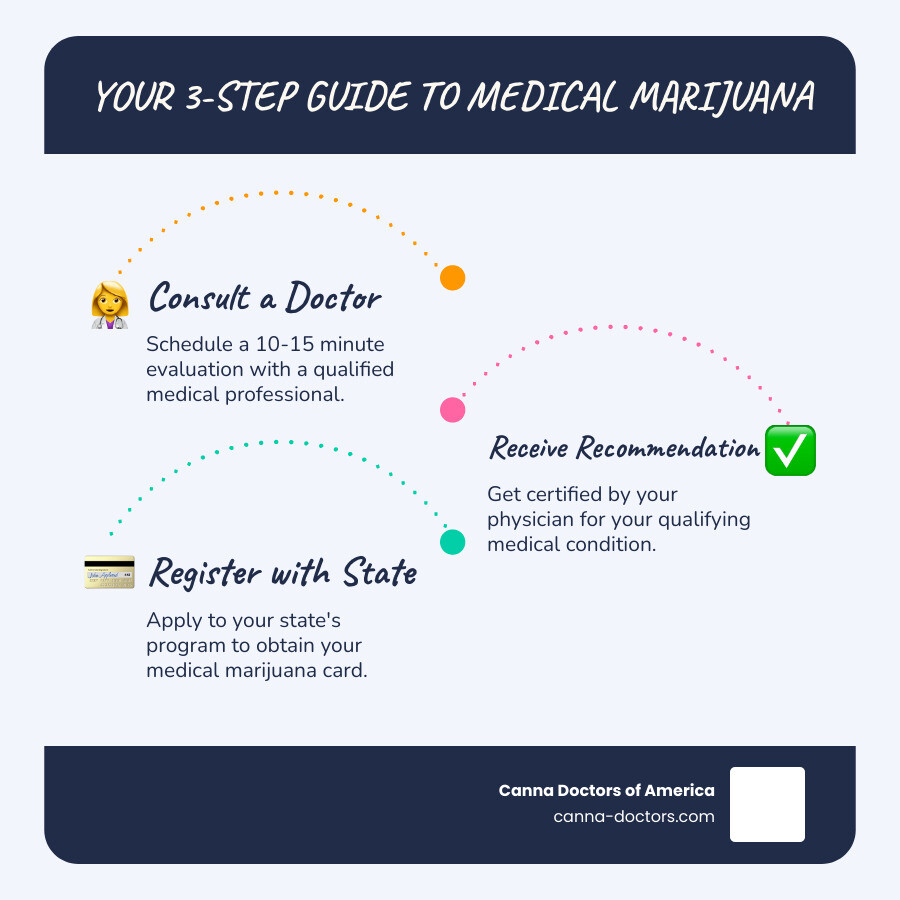
The 3 Essential Steps:
- See a qualified doctor for a medical cannabis evaluation (10-15 minutes)
- Get your physician’s recommendation certifying your qualifying condition
- Register with your state’s medical marijuana program and receive your card
The good news? Medical marijuana has been helping thousands of patients find relief from chronic conditions. In fact, many services that facilitate these evaluations, such as Green Health Docs and Veriheal, report high approval rates (often over 99%), and many patients receive same-day approval.
Whether you’re dealing with chronic pain, anxiety, or other qualifying conditions, getting legal access to medical cannabis doesn’t have to be complicated. Most consultations last just 10-15 minutes, and many states now offer telemedicine options for added convenience.
As Geoff Massey, Regional Director of Canna Doctors of America, I’ve helped countless patients steer how to get medical marijuana through our streamlined process that focuses on education and compassionate care. My experience working with an organization of highly trained medical doctors has shown me that the right guidance makes all the difference in helping patients access the relief they need.
How to get medical marijuana word list:
Understanding Your Eligibility: Who Qualifies for Medical Cannabis?
One of the first questions we often hear from folks exploring how to get medical marijuana is, “Am I even eligible?” It’s a fantastic question, and the answer truly depends on your state’s specific laws and, of course, your unique medical situation. While federal law still sees cannabis as illegal (we know, it’s confusing!), many states, including our home here in Florida, have created clear, compassionate medical marijuana programs.

Generally, to be eligible for medical cannabis, you’ll need a qualifying medical condition that’s been diagnosed by a physician. These conditions can vary quite a bit from state to state, but there’s often a common thread among them. Here in Florida, for instance, the law clearly outlines specific conditions that allow patients to qualify for medical cannabis. What’s even better? Beyond that list, a compassionate physician can also determine that other “comparable conditions” or even chronic non-malignant pain might qualify, especially if they are debilitating and other treatments haven’t quite done the trick. This thoughtful approach allows a wider range of patients to potentially find the relief they’ve been seeking.
So, what are some of these common qualifying conditions we see? Based on our experience and broader industry standards, many patients find relief for issues like:
- Chronic Pain: This is often the most common reason patients seek medical cannabis. It can include severe and ongoing pain, issues like back and neck problems, fibromyalgia, arthritis, and migraines. Even chronic back pain, while not explicitly listed, can be considered a “comparable condition” by a qualified physician in Florida.
- Cancer: Especially helpful for managing tough symptoms related to cancer treatment, such as persistent nausea, pain, and a lack of appetite.
- Neurological Disorders: This includes conditions like Epilepsy and Seizures, where certain cannabis products (especially CBD-rich ones) have shown promise in reducing seizure frequency. It also covers Multiple Sclerosis (MS), helping manage muscle spasms, pain, and other neurological symptoms.
- Post-Traumatic Stress Disorder (PTSD): Many patients report significant relief from the anxiety, insomnia, and other challenging symptoms associated with PTSD.
- HIV/AIDS: Medical cannabis can be a real help for wasting syndrome (cachexia), nausea, and stimulating appetite.
- Gastrointestinal Issues: Conditions like Crohn’s Disease and Irritable Bowel Syndrome (IBS) can see relief from inflammation and other digestive symptoms.
- Other serious conditions such as Glaucoma (to help reduce eye pressure), Parkinson’s Disease (for tremors and motor symptoms), Amyotrophic Lateral Sclerosis (ALS) (for muscle spasms and pain), and Alzheimer’s Disease (for managing agitation and improving sleep). While Anxiety and Depression aren’t always direct qualifying conditions on their own, they often go hand-in-hand with chronic pain or other qualifying conditions, and patients frequently report finding relief from these symptoms.
For your medical cannabis appointment, having documented medical history is key. While not specific to Florida, some clinics, like those in Canada, often require a recent diagnosis (within the past five years) and follow-up from a family doctor or specialist within the past year. This highlights the general need for clear, documented medical history to help your physician make the best recommendation.
Now, you might be wondering, “Can a caregiver get medical cannabis on my behalf?” The answer is a resounding yes! Many states, including Florida, understand that not everyone can easily visit dispensaries. That’s why they allow for the designation of a primary caregiver. This is particularly helpful for patients who are minors or those whose conditions make it difficult for them to manage their own cannabis. A designated caregiver must be at least 18 years old, registered with the state, and can legally purchase and possess medical cannabis for the patient. We’re here to guide you through the process of designating and registering a caregiver, making how to get medical marijuana even easier for those who need support.
What about minors? Yes, even minors can be eligible for medical cannabis. In Florida, if a patient is under 18, they’ll need two physicians to diagnose them with a qualifying medical condition. One of these physicians must be a pediatrician, and both must agree that medical cannabis is the most appropriate course of treatment. This adds an extra layer of medical oversight, ensuring the very best care for our younger patients.
Understanding these eligibility requirements is truly your first step on the journey to relief. We encourage you to dive deeper into our detailed resources: you can learn more about What Medical Conditions Can Marijuana Help With? and find specific information about Does Florida’s Medical Marijuana Program Include Minors?. For a broader perspective, you can also explore general information on State medical marijuana laws.
The Step-by-Step Process: How to Get Medical Marijuana Legally
Now that we’ve talked about who qualifies, let’s explore the practical steps of how to get medical marijuana legally. It might seem like a lot, but we’ve streamlined the process to make it as easy as possible for you. The journey generally involves seeing a doctor, getting their green light, and then signing up with your state’s medical marijuana program. It’s a structured path designed to ensure everyone accesses medical cannabis responsibly and safely.

Understanding the Doctor’s Role in How to Get Medical Marijuana
The doctor isn’t just a gatekeeper; they’re your most important guide on your journey to getting medical cannabis. Their role is central and crucial. Unlike recreational cannabis, accessing medical cannabis always requires a doctor’s evaluation and recommendation. This isn’t just a quick chat; it’s about making sure medical cannabis is the right, safe, and helpful option for your unique health needs.
Here’s a peek at what your doctor does for you:
First, they’ll do a thorough evaluation and confirm your diagnosis. They’ll look at your medical history, current symptoms, and any existing diagnoses you have. Their job is to confirm that you have a qualifying condition that truly stands to benefit from medical cannabis. For instance, they’ll review your medical records to ensure everything aligns.
Next, if you qualify, they’ll give you a medical cannabis recommendation (or certification). Because of federal laws, doctors can’t officially “prescribe” cannabis like other medications. But they can definitely “recommend” or “certify” that you need it for your health.
Beyond that, a great medical cannabis doctor will walk you through your treatment plan. They’ll chat about different cannabis strains, how you can use them (like edibles or vaping), and how to figure out your dose. They’ll likely suggest starting with a “low dose and going slow” to help you find what works best for you. This personalized approach is key.
Finally, at clinics like ours, we offer ongoing support. This means continued guidance on choosing products from licensed dispensaries, understanding what different types of cannabis do, and adjusting your plan as your needs change. We’re here for the long haul!
While we at Canna Doctors of America offer this comprehensive support, it’s helpful to know you have options. Many companies, such as Veriheal, NuggMD, and the previously mentioned Green Health Docs, are popular online platforms that connect patients with doctors for medical cannabis evaluations. They primarily focus on providing the necessary recommendation through telemedicine, which can be a quick and efficient option. When choosing a provider, it’s wise to compare factors like cost, availability in your state, and the level of ongoing support offered beyond the initial consultation.
What to Expect During Your Doctor Consultation:
When you come to Canna Doctors of America in Tampa, St. Petersburg, or Clearwater, we make the process smooth and easy.
- Flexible Options: We offer both telemedicine (virtual appointments from home!) and in-person consultations. Telemedicine has been a game-changer, especially for convenient recertifications.
- Documents You’ll Need: Please bring your proof of identity (like a Florida Driver’s License or ID) and proof of Florida residency (a utility bill or lease agreement works). Most importantly, we’ll need medical documentation that confirms your diagnosis. This could be notes from your physician, imaging reports (like X-rays or MRIs), or a list of your current medications. The more medical records you have, the smoother your evaluation will be.
- The Evaluation Itself: Our evaluations are designed to be quick and thorough, usually lasting no more than 10 to 15 minutes. Our experienced physicians will assess your condition and determine your eligibility swiftly. We’re proud to offer same-day approval for medical marijuana cards, getting you started on your path to relief as fast as possible.
Ready to take the first step? You can Book an Appointment with us today. And if you’re curious about our flexible virtual options, check out how Telehealth Restored for Marijuana Recertifications can make your life easier.
How to Get Medical Marijuana by Registering with Your State
Once you’ve got your doctor’s recommendation, you’re almost there! The next big step is to register with your state’s medical marijuana program. This official registration is what gives you legal protection and allows you to buy medical cannabis from licensed dispensaries. Without it, even with a doctor’s recommendation, you can’t legally purchase medical cannabis.
In Florida, this means registering with the Office of Medical Marijuana Use (OMMU). Here’s how the application process generally works:
First, your certifying physician will do some heavy lifting. After your evaluation, they’ll enter your information and their recommendation directly into the state’s Medical Marijuana Use Registry. This gets the ball rolling!
Next, it’s your turn to submit the application. You, or your designated caregiver, will need to complete an online application with the OMMU. This usually involves uploading a recent photo of yourself, showing proof of residency, and paying a state application fee. This fee is separate from what you pay for your doctor’s consultation.
Then comes the waiting game, as the state reviews your application. The processing time can differ. While some online services might promise super-fast approval, the state’s official processing can take up to 30 days. At Canna Doctors of America, our goal is to provide same-day approval for your physician certification, so you can submit your state application immediately. It’s worth noting that the level of support for the state application process can vary between providers; some may only provide the doctor’s recommendation, leaving you to complete the registration on your own. Always clarify what’s included.
Finally, once your application gets the green light, the state will issue your Medical Marijuana Use Registry Identification Card. This card is your golden ticket! It’s your legal authorization to purchase and possess medical cannabis. It also serves as important verification for both law enforcement and dispensaries.
For all the nitty-gritty details on Florida’s specific registration process, we highly recommend visiting Florida’s Office of Medical Marijuana Use. You can also get a better idea of how long the whole process might take by checking out our helpful resource on How Long to Get Your Medical Card.
Medical vs. Recreational: Why Get a Medical Card?
With more and more states allowing recreational cannabis, you might be asking yourself, “Why should I bother getting a medical card?” It’s a really good question, and one we hear all the time! The truth is, getting a medical marijuana card offers some pretty big advantages over just buying recreational cannabis. These benefits can mean better access, stronger legal protection, and even saving money in the long run.
Think of it this way: a medical card isn’t just a piece of plastic. It’s your key to a regulated, medically-focused system designed to help patients find relief. While recreational cannabis is about general adult use, medical cannabis is specifically custom for health and wellness needs.
So, what are these advantages? Let For instance, with a medical card, you generally have higher possession limits. This means you can legally have more cannabis on hand, which is helpful if you use it regularly for your condition.
You might also find that medical cannabis offers broader product selection, including higher potency options or specific ratios of cannabinoids (like CBD to THC) that aren’t always available in recreational markets. This can be crucial for managing certain medical conditions effectively.
Another big plus is compassionate pricing and potential tax savings. Many states exempt medical cannabis from sales taxes that recreational cannabis is subject to. Over time, these savings can really add up. Licensed medical dispensaries often have programs or discounts specifically for patients, too.
Perhaps one of the most important benefits is legal protections. Having a medical card can offer a layer of protection, especially when it comes to things like employment. While laws vary, some states offer certain protections against discrimination for registered medical cannabis patients. This is a peace of mind that recreational users don’t typically have.
Medical vs. Recreational Cannabis: A Quick Look
Let’s break down some of the key differences you’ll notice:
| Feature | Medical Cannabis | Recreational Cannabis |
|---|---|---|
| Possession Limits | Generally higher limits, custom for patient needs. | Often lower, fixed limits for adult use. |
| Potency/Product | Access to a wider range of products, including higher potency options and specific cannabinoid ratios for medical conditions. | May have caps on potency; product selection might be more limited to common forms. |
| Cost | Often exempt from sales taxes; potential for compassionate pricing and patient discounts. | Subject to higher sales and excise taxes; no patient discounts. |
| Age Limits | Typically 18+ (with provisions for minors and caregivers). | Usually 21+. |
| Legal Protections | Offers more robust legal protections, especially concerning employment and medical use. | Limited legal protections; subject to general public use laws. |
As you can see, getting your medical card offers distinct advantages that prioritize your health and legal safety. It’s about ensuring you have consistent, legal, and affordable access to the medicine you need.
Want to dive deeper into why a medical card might be right for you? Check out our article: Top 3 Reasons to Get Your Florida Medical Card.