Why Millions Are Turning to Cannabis for Chronic Pain
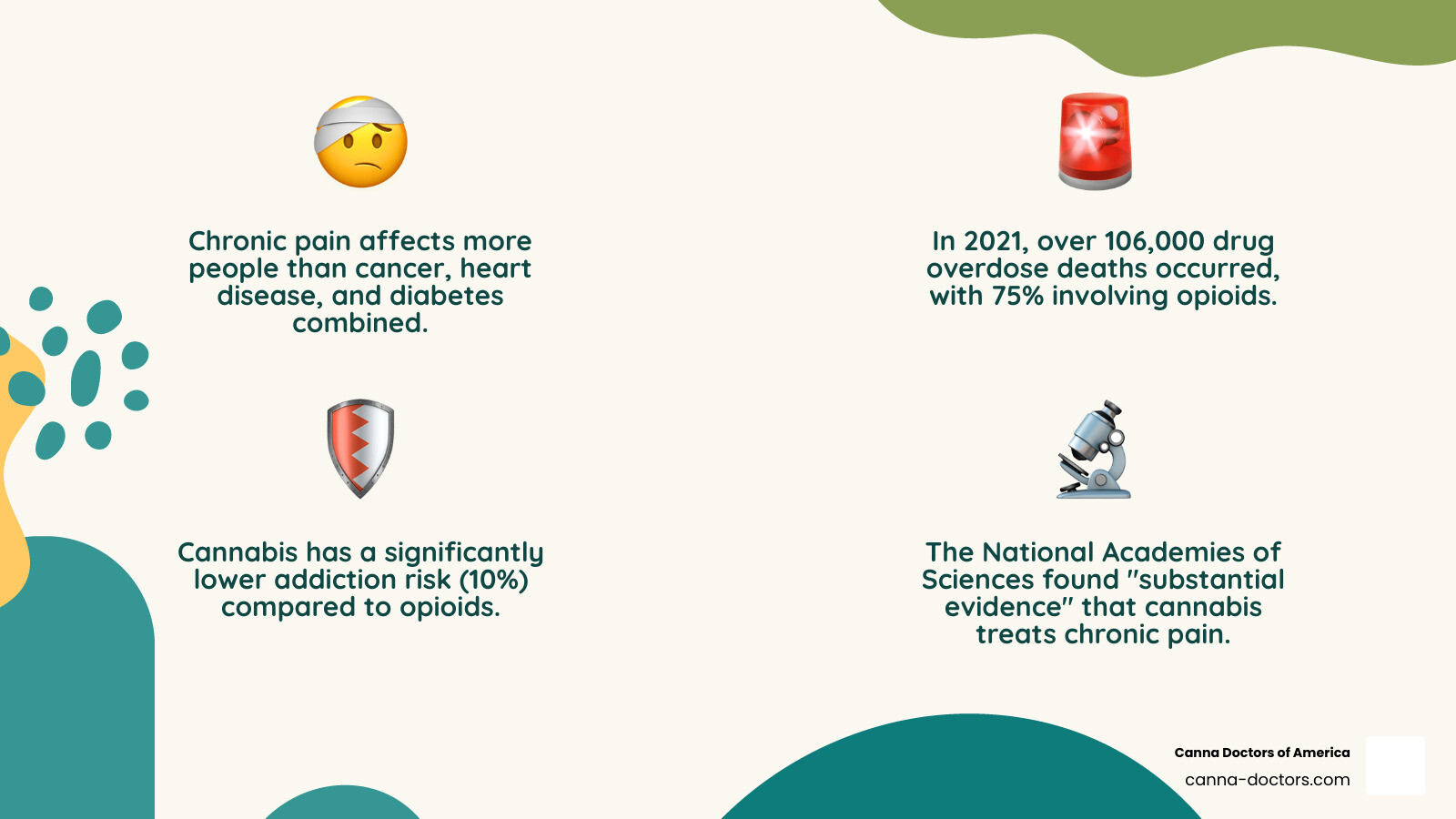
Marijuana for pain relief has become a critical topic in modern medicine. With over 106,000 drug overdose deaths in the U.S. in 2021—three-quarters involving opioids—and chronic pain affecting more people than cancer, heart disease, and diabetes combined, the need for safer alternatives is urgent.
The evidence is compelling: The National Academies of Sciences found “substantial evidence” that cannabis treats chronic pain, with studies showing its effectiveness is comparable to codeine. It carries a lower addiction risk (around 10%) than opioids, and an overwhelming 97% of medical marijuana patients report they can reduce opioid use when using cannabis. It’s commonly used for neuropathic pain, cancer pain, arthritis, and more.
Cannabis interacts with your body’s endocannabinoid system to regulate pain and reduce inflammation, offering a potentially safer path to pain management than opioids. However, it’s not a magic cure. Success depends on professional guidance to steer product quality, individual dosing, and legal considerations.
I’m Geoff Massey, Regional Director of Canna Doctors of America. I’ve helped thousands of patients use marijuana for pain relief as a safer alternative to traditional medications. My experience shows that while cannabis can be life-changing, success requires a personalized medical plan.
Marijuana for pain relief terms to learn:
Understanding Cannabis: How It Works for Pain
The cannabis plant contains over 100 chemical compounds called cannabinoids and aromatic compounds called terpenes that work with your body to ease discomfort. The legal difference between marijuana and hemp is the THC content: 0.3% or more is marijuana (federally illegal), while less is hemp (federally legal).
Key Compounds: THC, CBD, and the Entourage Effect
Two cannabinoids are the stars of marijuana for pain relief: THC and CBD.
THC (delta-9-tetrahydrocannabinol) is known for the “high,” but it’s also a powerful pain reliever that changes how the brain perceives pain. Research shows 10mg of THC can provide pain relief comparable to 60mg of codeine.
CBD (cannabidiol) is non-intoxicating and excels at reducing inflammation, a primary cause of chronic pain. It works at the cellular level to calm inflammatory responses.
Terpenes, the aromatic compounds in cannabis, also play a key role. Studies show terpenes like beta-caryophyllene can be as effective as morphine for some types of nerve pain.
This leads to the entourage effect: the theory that all these compounds work better together. A full-spectrum product containing THC, CBD, and terpenes often provides more effective relief with fewer side effects than isolated compounds.
Scientific overview of the entourage effect
How Cannabis Interacts with Your Body’s Pain Signals
Your body has its own endocannabinoid system (ECS), a master control network that keeps everything in balance. It has two key receptor types for pain management:
- CB1 receptors, mostly in the brain and spinal cord, are targeted by THC to alter pain perception and your emotional response to it.
- CB2 receptors, found in your immune system, are targeted by cannabinoids to control inflammation.
When you use cannabis, its compounds partner with your ECS to regulate pain signals, modulate inflammation, and restore overall balance. This is how marijuana for pain relief can address underlying causes, unlike medications that just mask symptoms.
The Evidence: What Science Says About Marijuana for Pain Relief
For decades, legal restrictions made large-scale cannabis research difficult. As a Schedule I drug, it faces significant red tape. Despite these roadblocks, the existing evidence is compelling.
In 2017, a massive review by the National Academies of Sciences, Engineering, and Medicine found “substantial” or “conclusive” evidence that cannabis is an effective treatment for chronic pain. The main challenge for patients is product variability, which is why medical guidance is crucial when exploring marijuana for pain relief.
The National Academies of Sciences comprehensive report on cannabis
Let’s look at what research says about specific types of pain.
Neuropathic (Nerve) Pain
Cannabis shines brightest in treating neuropathic pain—the burning, tingling, or shooting pain from nerve damage that often resists traditional medication. A review of 16 studies found that cannabis led to a 30% decrease in pain severity for patients with nerve pain. For someone in constant pain, a 30% reduction is life-changing. The data shows about 1 in 6 patients with neuropathic pain gets meaningful short-term relief from low-dose cannabis.
Research review on cannabinoids for chronic pain
Cancer-Related Pain
Cannabis is an effective adjunctive therapy for cancer patients, helping manage pain, nausea, and other side effects from treatment. Studies show patients using cannabis experienced a 64% reduction in opioid use and a 45% improvement in quality of life. In a large study of 17,000 cancer patients, 70% reported improvement in pain and well-being after using cannabis.
Other Chronic Pain Conditions
Research is exploring cannabis for a wide range of other conditions:
- Arthritis: The anti-inflammatory properties of compounds like CBDA show promise for both rheumatoid and osteoarthritis.
- Fibromyalgia: Patient surveys consistently show cannabis helps manage widespread pain, fatigue, and sleep issues.
- Chronic Back Pain: While not always a direct qualifying condition, chronic back pain can qualify. Patients report less pain, reduced opioid use, and improved quality of life.
- Polymyalgia Rheumatica: This inflammatory condition responds well to cannabis’s anti-inflammatory and analgesic properties.
Cannabis vs. Opioids—and Other Common Pain Treatments
The opioid crisis statistics are grim: over 106,000 overdose deaths in the U.S. in 2021, with 75% involving an opioid. Prescription opioid sales quadrupled from 1999 to 2014, yet reported pain levels didn’t improve. Opioids come with high addiction potential, life-threatening respiratory depression, and diminishing effectiveness over time due to tolerance. This reality has pushed many to seek a safer alternative in marijuana for pain relief.
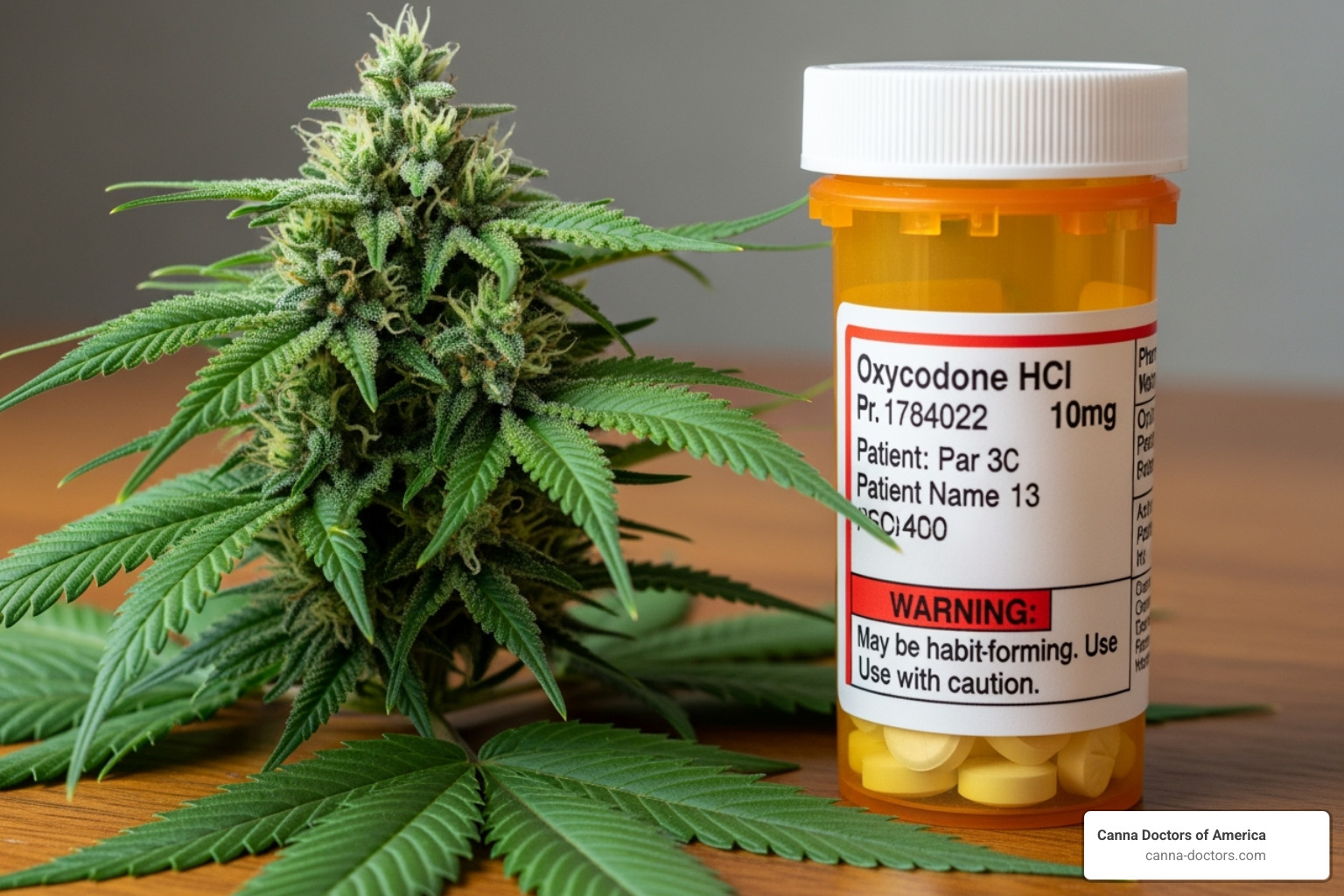
When you compare cannabis, opioids, and other mainstream options, the differences are striking.
| Treatment | Typical Use Case | Key Benefits | Key Drawbacks / Risks |
|---|---|---|---|
| Cannabis (THC/CBD) | Mild–moderate chronic pain, neuropathic pain, cancer pain | Low addiction risk; anti-inflammatory; virtually no fatal overdose | Psychoactive effects (THC); legal complexity; drug-drug interactions |
| Opioids (e.g., oxycodone) | Moderate–severe acute pain, cancer pain | Strong short-term analgesia | High addiction/overdose risk; tolerance; constipation, respiratory depression |
| NSAIDs (ibuprofen, naproxen) | Inflammatory pain, arthritis, acute injuries | Widely available; non-sedating | GI bleeding/ulcers, kidney strain, cardiovascular risks with long-term use |
| Acetaminophen (paracetamol) | Mild–moderate pain, fever | Low cost; over-the-counter | Liver toxicity at high doses; limited anti-inflammatory effect |
| Gabapentinoids (gabapentin, pregabalin) | Neuropathic pain, fibromyalgia | Non-opioid option; minimal GI issues | Dizziness, weight gain, growing misuse concerns |
| Antidepressants (duloxetine, amitriptyline) | Neuropathic pain, fibromyalgia, migraine prophylaxis | Also treats mood disorders | Dry mouth, fatigue, sexual dysfunction; titration required |
| Non-drug therapies (PT, acupuncture, CBT) | Musculoskeletal pain, chronic pain syndromes | No pharmacologic side effects; addresses root biomechanics or psychosocial factors | Requires time & access; variable insurance coverage |
Can Cannabis Reduce Opioid Dependence?
Many patients find that cannabis not only works as an alternative but helps them reduce or eliminate their opioid use—an “opioid-sparing effect.” A survey of nearly 3,000 medical cannabis users found that 97% could decrease their opioid use when using cannabis. Furthermore, 81% strongly agreed that cannabis alone was more effective than taking it with opioids.
Broader research supports this. States with medical cannabis laws have significantly lower opioid overdose mortality rates and fewer opioid prescriptions. This suggests that when given the choice, patients and doctors are opting for cannabis over opioids.
Where Cannabis Fits in a Comprehensive Pain Plan
Because every modality has strengths and weaknesses, many clinicians now use a multimodal pain strategy:
- First-line: Lifestyle measures, physical therapy, NSAIDs or acetaminophen for acute flares.
- Second-line: Gabapentinoids or certain antidepressants for neuropathic components.
- Adjunct / Alternative: Medical cannabis, particularly when inflammation or nerve pain persists and opioid avoidance is a goal.
- Last-line or Short-term: Opioids for severe, refractory, or end-of-life pain, with careful monitoring.
In this framework, cannabis functions as a middle-ground option—stronger and often safer than long-term opioids, yet able to complement or replace NSAIDs, gabapentinoids, and antidepressants for many patients.
Study on cannabis as a substitute for opioids
A Practical Guide to Using Medical Marijuana for Pain Relief
Starting with marijuana for pain relief requires a patient, methodical approach. The golden rule is “start low, go slow.” Begin with the smallest dose and increase it gradually over days or weeks until you find the right balance of pain relief without unwanted side effects. Keeping a dosing diary to track what you took, when, and how you felt can help you and your doctor fine-tune your plan. Consistency is also key, so always use lab-tested products from licensed dispensaries.
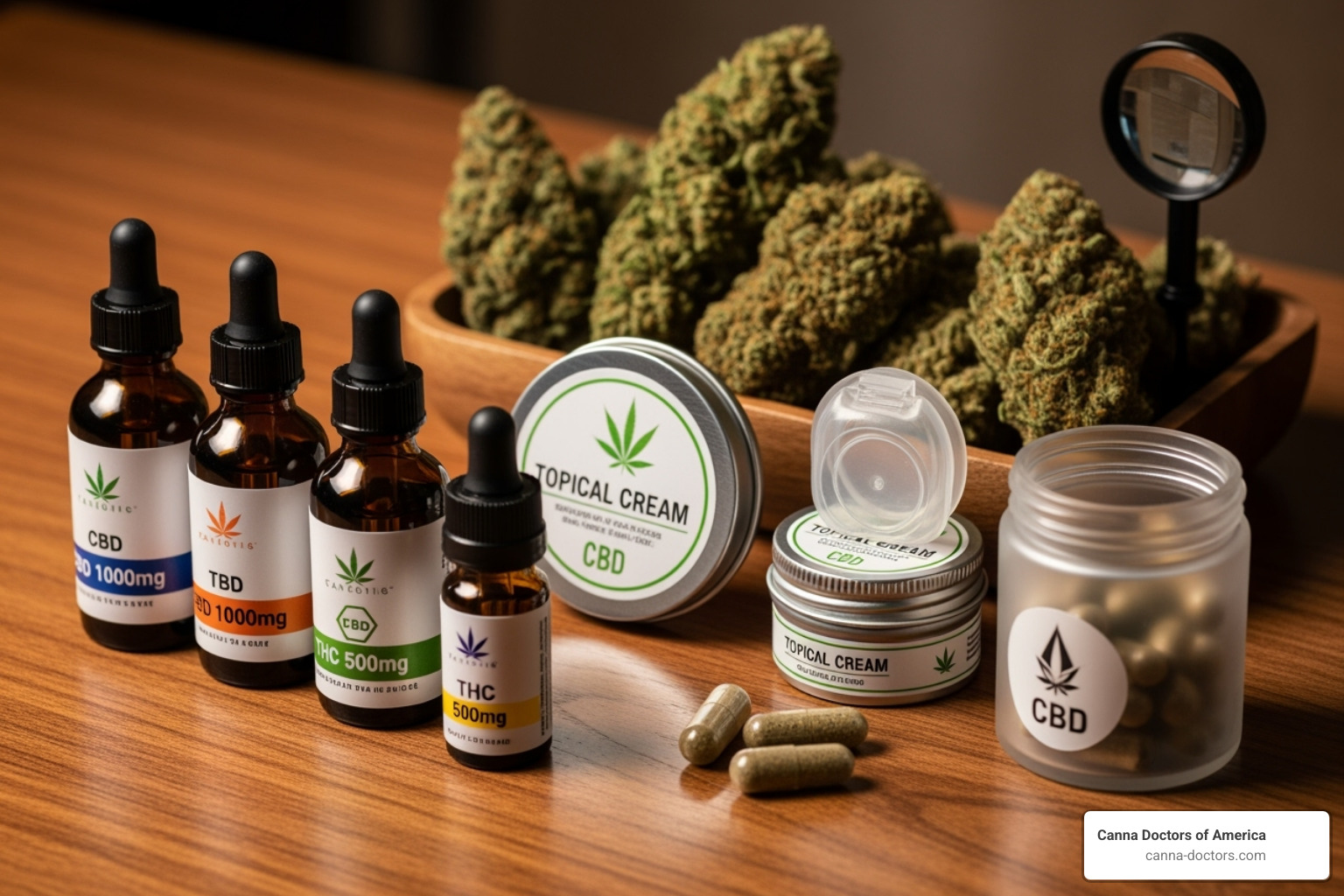
Finding the Right Form and Dosage
Medical cannabis is versatile, with several consumption methods:
- Inhalation (Vaping/Smoking): Offers the fastest relief (within minutes), ideal for breakthrough pain. Effects last 2-6 hours. Vaping is gentler on the lungs than smoking.
- Oral (Capsules/Tinctures/Edibles): Slower onset (30 minutes to 2 hours) but much longer-lasting relief (4-12 hours), making it great for all-day pain management. Start very low (1-2.5 mg of THC) and wait at least 3 hours before taking more.
- Topicals (Lotions/Balms): Provide targeted, non-psychoactive relief for localized pain like sore joints. Effects are felt in 10-20 minutes and last 1-2 hours.
Finding the right approach is highly personal. A qualified medical marijuana provider—whether it’s our team at Canna Doctors of America or other reputable services like Veriheal or Marijuana Doctor—can help you steer these choices systematically.
Navigating the Legal Landscape and FDA Status
U.S. cannabis law is a confusing patchwork. Cannabis remains a federally illegal Schedule I substance. However, the 2018 Farm Bill legalized hemp and hemp-derived products (under 0.3% THC). Marijuana (0.3% or more THC) is regulated at the state level. The FDA has not approved cannabis for pain, though it has approved specific cannabinoid-based drugs for other conditions. This means doctors “recommend” rather than “prescribe” cannabis in states where it’s legal, like Florida.
NCSL database of state medical marijuana laws
Understanding Risks and Side Effects
While safer than many pain medications, cannabis is not risk-free. Most side effects are mild and THC-related, including dizziness, dry mouth, fatigue, and increased appetite. Impairment is a real concern; never drive or operate machinery while under the influence. Addiction is possible but affects only about 10% of users, far less than opioids.
Certain groups should be cautious or avoid cannabis, including teenagers, pregnant or breastfeeding individuals, and those with serious mental health conditions like schizophrenia. It can also interact with other medications, so always discuss cannabis use with your healthcare provider.
SAMHSA National Helpline for substance use disorder
Frequently Asked Questions about Marijuana for Pain Relief
We hear a lot of questions from our patients about marijuana for pain relief. Here are some of the most common ones we address:
What’s the best cannabis strain for pain?
The traditional labels of “Indica,” “Sativa,” and “Hybrid” are not reliable predictors of a product’s effects. Instead, focus on the chemovar, or the chemical profile of the plant. The most important factors for pain relief are the THC:CBD ratio and the terpene profile. For example, a 1:1 THC:CBD ratio often works well for inflammatory pain, while higher THC may be better for nerve pain. The “best” cannabis is individual, so buy lab-tested products and use a “start low, go slow” approach to find what works for you.
Is CBD alone effective for pain?
CBD has impressive anti-inflammatory properties and can help with pain stemming from inflammation. However, research on CBD alone for pain is mixed. Many studies suggest THC is the primary pain-relieving component in cannabis. Evidence for the entourage effect suggests CBD works best when combined with at least a small amount of THC. While CBD-only products are a great starting point for new users, many patients with chronic pain find they need a product containing THC for effective relief.
How do I get a medical marijuana card for pain in Florida?
In Florida, chronic pain is a legitimate reason to qualify for a medical marijuana card, often as a “comparable condition” to those listed in the state law. Chronic back pain is one of the most common qualifying conditions.
The general process is straightforward:
- Medical Evaluation: Have a comprehensive evaluation with a certified physician to review your medical history and pain conditions.
- Registry Entry: If you qualify, the physician enters your information into Florida’s Medical Marijuana Use Registry.
- State Application: You apply to the Florida Office of Medical Marijuana Use (OMMU) for your card.
- Purchase Legally: Once approved, you can purchase medical cannabis from licensed Florida dispensaries.
Many clinics, including competitors like Marijuana Doctor and Veriheal, as well as our team at Canna Doctors of America, specialize in guiding patients through this process, with many patients receiving same-day approval.
Conclusion: Is Cannabis the Right Choice for Your Pain?
The evidence is clear: marijuana for pain relief is a legitimate therapeutic option, especially for nerve and cancer-related pain. When 97% of patients can reduce their opioid use with cannabis, it signals a powerful shift in pain management.
However, cannabis is not a one-size-fits-all solution. It’s a form of personalized medicine. Your unique body chemistry and pain type will determine what works. Success depends on finding the right product, dose, and delivery method for you.
Compared to opioids, cannabis offers a much safer profile, with a lower addiction risk and virtually no chance of fatal overdose. Still, be aware of potential side effects and use it responsibly.
Professional guidance is crucial for navigating the legal landscape, understanding products, and creating a successful treatment plan. While there are several services available, such as Marijuana Doctor or Veriheal, it’s important to choose a provider you trust. At Canna Doctors of America, we’ve helped thousands of patients find relief with our personalized approach, helping you determine if medical cannabis is the missing piece in your pain management puzzle.
If you’re tired of living with chronic pain, our team in Tampa, St. Petersburg, and Clearwater is here to help you explore your options.
Learn more about getting your medical marijuana card in Florida