Understanding Medical Marijuana Cards: Your Essential Guide
A weed card—officially known as a Medical Marijuana Identification Card (MMID)—is a state-issued identification that permits qualified patients to legally purchase, possess, and use medical cannabis from licensed dispensaries. It serves as official proof that a patient has been registered with the state’s medical cannabis program after receiving a doctor’s recommendation.
Quick facts
- Validity: Cards are typically valid for 12 months and require annual renewal to ensure ongoing medical supervision.
- Requirements: Obtaining a card involves a formal recommendation from a licensed doctor and official registration with the state’s health department.
- Key Benefits: Cardholders enjoy significant advantages, including lower taxes on purchases, higher possession limits, access to a wider range of therapeutic products, and crucial legal protections under state law.
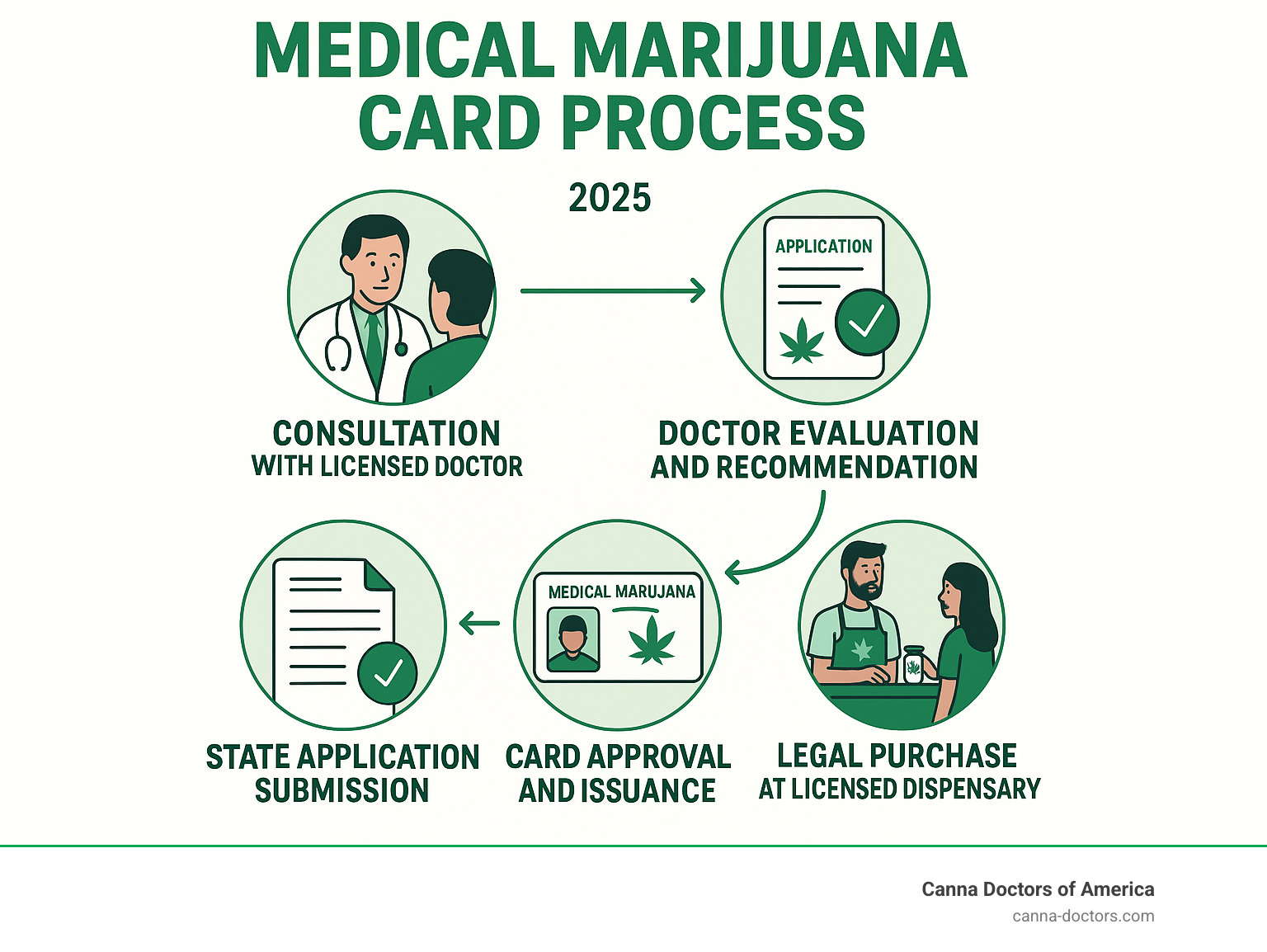
The Five-Step Process to Your Card
- Confirm Eligibility: First, verify that you have a medical condition that qualifies under your state’s specific laws.
- Consult a Doctor: Schedule an evaluation with a physician licensed to recommend medical marijuana.
- Apply with the State: Complete and submit the official online application to the state’s medical marijuana program.
- Pay Required Fees: This includes the fee for the doctor’s consultation and a separate fee for the state application.
- Receive Your Card: Once approved, your official MMID card will be mailed to you, typically within one to three weeks.
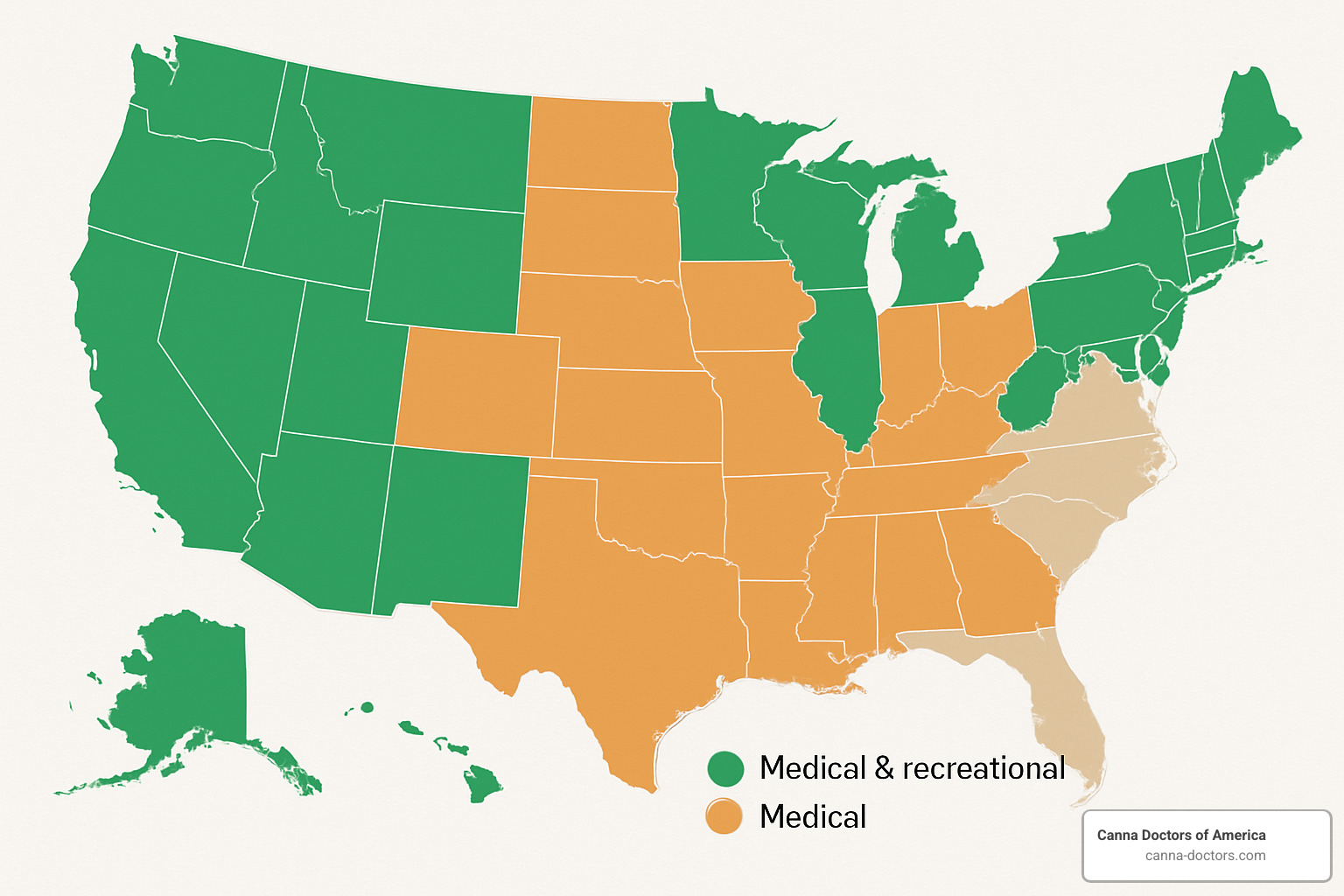
As of 2025, more than 30 states—including Florida—have established robust medical cannabis programs to help patients manage conditions like chronic pain, PTSD, and cancer-related symptoms.
I’m Geoff Massey, Regional Director at Canna Doctors of America. After guiding thousands of patients through this process in Tampa, St. Petersburg, and Clearwater, I’ve seen how a clear, step-by-step understanding demystifies the journey and empowers patients to seek the relief they deserve. Other reputable clinics serving Florida patients include DocMJ, Marijuana Doctor, and Green Health Docs, giving you multiple options when deciding where to obtain your physician evaluation.
Decoding the Medical Marijuana Card: What It Is and Why It Matters
Think of a weed card as a doctor-backed pass to legal, tested, and regulated cannabis. The card signifies that the state has officially reviewed a licensed physician’s recommendation and verified that you have a legitimate medical need for cannabis, granting you access to the state’s program.
Why the Card Exists
- Safe, Regulated Access: Medical programs ensure that products sold in licensed dispensaries are lab-tested for purity, potency, and contaminants. This provides patients with consistent, reliable medicine, free from harmful substances.
- Professional Medical Guidance: A card connects patients with a qualified doctor who can provide recommendations on dosage, consumption methods, and cannabinoid profiles (like THC vs. CBD) custom to their specific condition. This is a stark contrast to navigating the recreational market alone.
- Legal Protection: The card shields registered patients from most state-level civil and criminal penalties related to the possession and use of medical cannabis, as long as they comply with state regulations.
The State–Federal Split
While state laws have evolved, cannabis remains a Schedule I controlled substance at the federal level. This classification means it’s considered to have no accepted medical use and a high potential for abuse. However, the federal government has generally adopted a hands-off approach to individuals complying with their state’s medical cannabis laws. This means if you follow your state’s rules (like Florida’s), you are protected locally. This protection does not cross state lines, and it is illegal to transport cannabis over them.
For a detailed state-by-state overview, see the National Conference of State Legislatures’ guide to state medical marijuana laws.
Are You Eligible? Qualifying Conditions and Requirements

Eligibility for a medical marijuana card is determined by state law, which outlines a specific list of qualifying conditions. While these lists vary, most states recognize the therapeutic potential of cannabis for a core set of ailments.
Common qualifying conditions include:
- Chronic pain (often defined as pain lasting longer than 12 weeks)
- Cancer & side effects of chemotherapy (like nausea and appetite loss)
- Epilepsy and other seizure disorders
- Multiple Sclerosis (MS)
- Post-Traumatic Stress Disorder (PTSD)
- HIV/AIDS
- Glaucoma
- Crohn’s disease and other severe gastrointestinal disorders
Many states, including Florida, also have a clause for “medical conditions of the same kind or class,” which gives a qualified physician the discretion to recommend cannabis for other debilitating conditions not explicitly listed. Check Florida’s full list here: qualifying conditions.
Paperwork You’ll Need
To ensure a smooth application process, gather these documents beforehand:
- Proof of Florida Residency: A valid Florida driver’s license or state ID is standard. If you don’t have one, a utility bill or bank statement in your name at a Florida address can often be used.
- Government-Issued Photo ID: This confirms your identity.
- Relevant Medical Records: These documents help your physician understand your health history and make an informed, responsible recommendation. They are essential for a bona fide medical evaluation.
- Physician’s Recommendation: This is the official certification from a doctor registered with the state’s medical marijuana program, which you will receive at your appointment.
- Application Fee: State fees typically range from $50–$200. Many programs offer discounts for veterans or patients on financial assistance.
Minors can often qualify with additional safeguards, such as requiring consent from two physicians and a designated adult caregiver. Learn more here: Florida’s program for minors.
Role of the Medical Marijuana Doctor
Your relationship with a medical marijuana doctor is a legitimate doctor-patient relationship. These state-registered physicians perform a bona fide evaluation, review your medical history, and determine if cannabis is an appropriate treatment option for you. They are responsible for providing ongoing supervision, managing your dosage recommendations, and handling your annual renewals. Need to change doctors? See how here: transfer guide.
Medical vs. Recreational: Why a Weed Card Still Matters

Even in states where cannabis is legal for all adults, holding a medical card provides distinct and valuable advantages. The two systems are designed for different purposes: one for therapeutic use under medical supervision, and the other for adult consumer use.
| Benefit | Medical Card | Recreational |
|---|---|---|
| Minimum age | 18 (with doctor) | 21 |
| Taxes | Lower or none | High |
| Possession | Higher limits | Standard |
| Potency | Stronger products | Often capped |
| Dispensaries | Medical-only access | Recreational only |
Here’s a closer look at why these differences matter:
- Lower Costs: Recreational cannabis is often subject to high excise taxes, sometimes adding 15-30% or more to the final price. Medical patients typically pay only standard sales tax or are fully exempt, saving them hundreds or even thousands of dollars per year.
- Higher Possession and Purchase Limits: Medical programs recognize that patients need a consistent, uninterrupted supply of their medicine. Therefore, cardholders are legally allowed to purchase and possess larger quantities of cannabis than recreational users.
- Access to Higher Potency Products: Some recreational markets place a cap on the THC content of products like edibles and tinctures. Medical programs allow for higher-potency options, which are often necessary for patients managing severe or chronic symptoms.
- Specialized Products and Dispensaries: Medical-only dispensaries are staffed by budtenders with specialized training in the therapeutic uses of cannabis. They can offer guidance on products designed for symptom control, such as high-CBD tinctures, capsules, and topicals that may not be available on the adult-use market.
In Florida, the cannabis market remains medical-only, making a card mandatory for legal access. Learn more: Top 3 reasons to get your Florida medical card.
Your Step-by-Step Guide to Getting a Medical Marijuana Card
Feeling overwhelmed by the process? It’s more straightforward than it seems when you break it down into these five manageable steps.
1. Book a Consultation
Your first step is to schedule an appointment with a qualified physician. You can use your state’s official provider list or find a trusted, reputable clinic like Canna Doctors of America, DocMJ, Marijuana Doctor, or Green Health Docs. Look for clinics with transparent pricing and board-certified doctors. For renewals, telehealth appointments are often available for convenience. Details here.
2. Gather Your Documents
Prepare for your appointment by collecting your state ID, proof of address (if your ID is not current), relevant medical records, and a payment method for the consultation and state fees. Bringing these items with you ensures the process is as fast and efficient as possible.
3. Attend Your Evaluation
This is a confidential medical appointment where you will have a one-on-one discussion with the doctor. They will review your medical history, discuss your symptoms and health goals, and answer any questions you have. If they determine that cannabis is an appropriate option for you, they will issue your official physician’s recommendation that same day.
4. Submit the State Application
With your recommendation in hand, you’ll complete the final step: the state application. This is typically done online through the state’s medical marijuana use registry. You will upload your documents and pay the state fee. Most approvals are processed within 1–3 weeks. Some states, including Florida, will email you a temporary digital ID you can use to purchase medicine immediately after your approval.
5. Visit the Dispensary
Once your application is approved and you have your card (or temporary ID), you can visit any licensed medical dispensary in your state. Bring your medical card and your photo ID. For your first visit, don’t hesitate to ask the dispensary staff for help navigating the products and finding what your doctor recommended.
Typical Costs: Expect the doctor’s visit to be between $150–$300 and the state fee to be $50–$200. Cards are valid for 12 months, and the renewal process is generally cheaper and faster. More detail: process page.
Navigating Medical Cannabis Safely: Risks, Forms & Research
Cannabis is a powerful medicine and should be treated with the same respect and caution as any other prescription. Understanding its effects, risks, and proper use is key to a safe and effective therapeutic experience.
Possible Side Effects
Side effects are often dose-dependent and can be managed by adjusting the product or dosage. Always start with a low dose and increase slowly.
- Short-term: Common effects can include drowsiness, impaired coordination and reaction time, dry mouth, and increased heart rate. Some individuals, especially new users or those sensitive to THC, may experience anxiety or paranoia.
- Long-term: Potential risks associated with long-term, heavy use include developing a tolerance (needing more to achieve the same effect), the potential for Cannabis Use Disorder (affecting about 1 in 5 young adult regular users), and respiratory issues if cannabis is smoked regularly. Never drive or operate heavy machinery while impaired. Pregnant or nursing women should avoid cannabis.
Delivery Methods
How you consume cannabis dramatically affects its onset, duration, and intensity.
- Inhalation (smoking/vaping): Offers the fastest relief, with effects felt in minutes. It’s ideal for acute symptoms but carries respiratory risks. Effects last 2–6 hours.
- Edibles/Capsules: Provides discreet, long-lasting relief. However, onset is slow (30–120 minutes), making it easy to overconsume. Effects can last 4–8 hours or more.
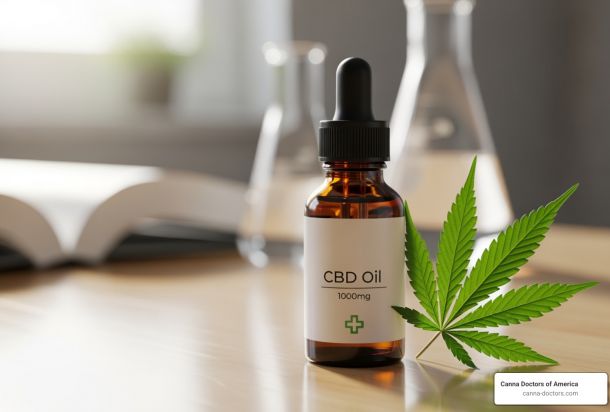
- Sublingual Tinctures: Drops placed under the tongue are absorbed directly into the bloodstream for relatively fast onset (~20 minutes) without involving the lungs. Effects last 4–6 hours.
- Topicals & Patches: Creams, balms, and patches are applied to the skin for localized relief of pain and inflammation or for slow, systemic delivery.
Always start low, go slow, and keep your doctor informed about your experiences.
Mental-Health Research Snapshot
The scientific community is actively studying cannabis. Evidence is strongest for its use in treating chronic pain, chemotherapy-induced nausea, and spasticity from MS. For mental health, research shows promise for PTSD. The effects on anxiety are complex: CBD-dominant products may ease anxiety, while high-THC products can worsen it in some users. Because research is ongoing and often limited by federal restrictions, continuous medical oversight is essential for all patients.
Further reading: Frontiers in Psychiatry review and WebMD’s Medical Marijuana FAQ.
Frequently Asked Questions
Can I use my weed card in another state?
This is a common question with a complex answer. Some states have medical cannabis “reciprocity,” meaning they will recognize and honor an out-of-state card. However, many do not. It is also critical to remember that because cannabis is federally illegal, you can never legally transport it across state lines, even between two legal states. Always check the specific laws of the state you plan to visit before you travel.
Are there FDA-approved cannabis medications?
Yes. The FDA has approved Epidiolex, which is a plant-derived CBD medication for treating certain rare forms of epilepsy. It has also approved three synthetic cannabis-related drug products: Marinol, Syndros, and Cesamet. These are used to treat nausea caused by chemotherapy and appetite loss in patients with AIDS. These are pharmaceutical prescriptions that do not require a state-issued weed card and are chemically different from whole-plant cannabis available in dispensaries.
Can I be fired for having a medical marijuana card?
This depends on your state’s laws and your employer’s policies. In Florida, an at-will employment state, there are currently no explicit employment protections for medical cannabis patients. Because cannabis remains illegal federally, most employers are within their rights to maintain a zero-tolerance, drug-free workplace policy. It is crucial to understand your specific employer’s rules regarding drug testing and use.
How do I find a legitimate doctor?
To find a trustworthy medical marijuana doctor, confirm that the physician is listed on Florida’s official Office of Medical Marijuana Use (OMMU) registry and holds an active, unrestricted state medical license. Be wary of services that promise “guaranteed approval” without conducting a real, bona fide medical evaluation. At Canna Doctors of America, we pride ourselves on our team of board-certified physicians, transparent pricing, and same-day decisions at our clinics in Tampa, St. Petersburg, and Clearwater.
Conclusion
Obtaining a weed card is a structured, manageable process that opens up access to vital medicine for thousands of patients. The journey is simpler than it looks: it begins with a consultation with a qualified doctor, followed by a straightforward state application, and is maintained through regular check-ins with your physician. For patients with chronic and debilitating conditions, the payoff is immense. The legal protection, significant cost savings, and access to a wide array of tested, medical-grade products can be genuinely life-changing.
Providers such as Canna Doctors of America, DocMJ, Marijuana Doctor, and Green Health Docs all offer board-certified physicians and streamlined assistance with the application process, so choose the clinic that best fits your location, budget, and comfort level.
At Canna Doctors of America, we are dedicated to providing compassionate care and expert guidance to patients across Tampa, St. Petersburg, and Clearwater, offering same-day approvals to get you on the path to relief as quickly as possible. If you are ready to explore how medical cannabis can fit into your healthcare plan, we are here to help.
Take control of your health—relief could be one consultation away. Book an appointment today.